
Research Approach
Heuristic Markup, Internal Markup, Competitor Analysis, User Flows, Customer Journey Maps, Wireframes, Prototyping, Usability Testing, Prototyping, Heat Mapping, Focus Mapping
Tech Stack
Miro, Figma, Illustrator
Introduction
The Problem
Amazon's use of deceptive design practices in the checkout flow poses a significant challenge to ensuring a transparent and user-friendly shopping experience for customers. By employing deceptive tactics, Amazon may inadvertently undermine trust and frustrate users during the checkout process. These deceptive practices can lead to unintended purchases, increased cart abandonment rates, and instances where users unknowingly sign up for Amazon Prime subscriptions, deceiving the very customers in which the business thrives from.
The Challenge
What would Amazon's checkout flow look like if the user's experience was put first?
"What would Amazon's checkout flow look like if the user's experience was put first?"
The Solution
Redesign the Amazon checkout flow to improve the user experience by eliminating deceptive design tactics that frustrate users, thereby reducing dissatisfaction within the checkout process. The solution focused on enhancing clarity, simplifying user interactions, and promoting ethical design practices. The Amazon Prime subscription service, crucial to the business model for its revenue and customer loyalty, was maintained within the redesign but presented in a less forceful manner, ensuring it remains attractive without pressuring users.
Research
Heuristic Markup

If I was to show you all the deceptive patterns I discovered, it would take forever!
I conducted a heuristic markup of the FTC versus Amazon case paper as part of my analysis of deceptive design patterns on Amazon's platform. Using heuristic evaluation principles, I annotated the document to highlight instances where deceptive design practices have been used to deceive users.
This markup process of the FTC versus Amazon case paper allowed me to systematically identify examples of deceptive design patterns, contributing to my deeper understanding of the issues at hand. With this information alongside my further research, I began to identify key pain-points to target alongside creating comparisons with my research of both Amazon web and mobile flows.
Pain Points
Scaling Your Site
Optimize for SEO
CMS Examples

CMS Examples
CMS Examples
CMS Examples
Customer Journey Map
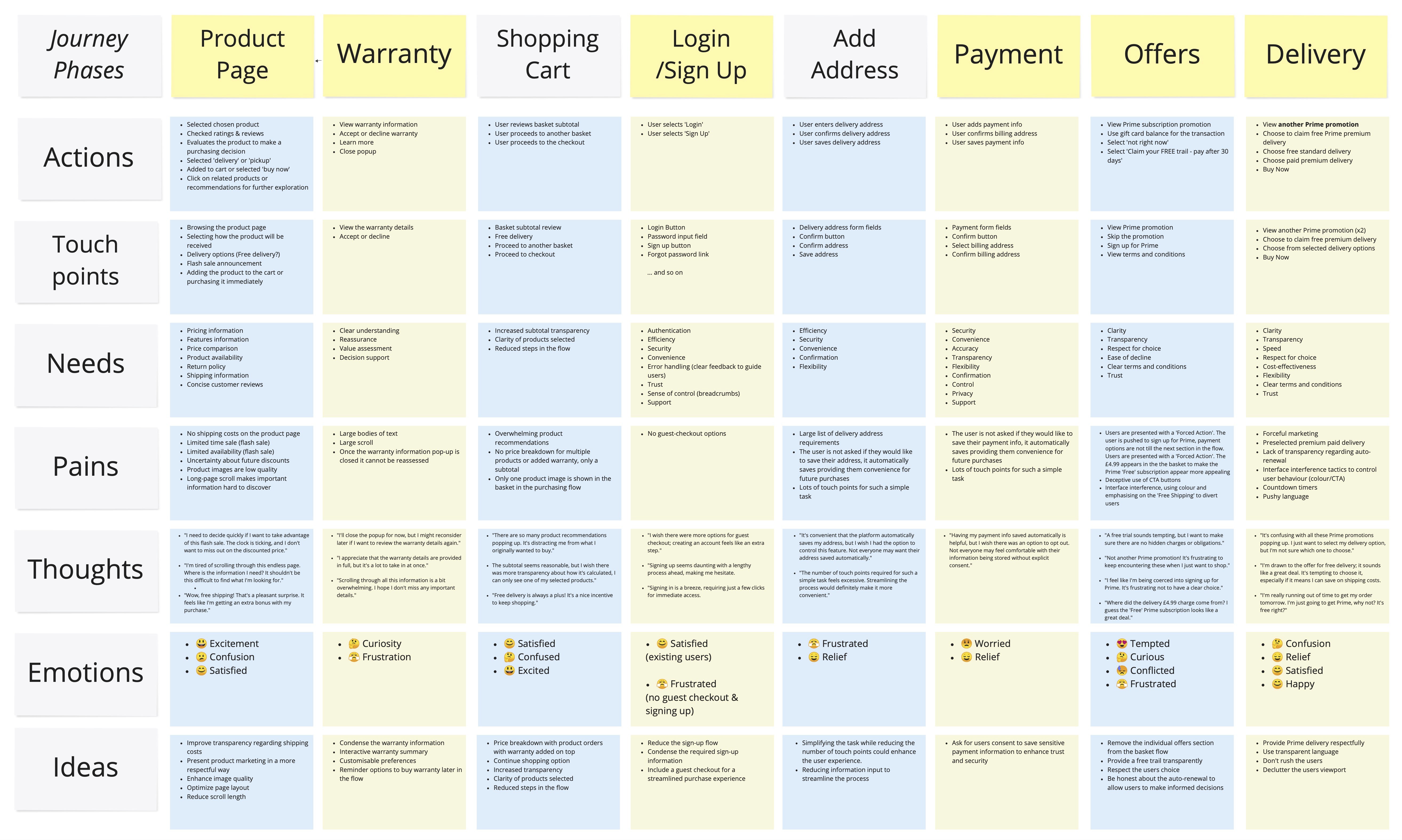
fsfd
Competitor Analysis


Analysing E-Commerce competitors: I conducted a comprehensive competitor analysis to uncover industry best practices and potential areas of differentiation among e-commerce competitors. I gained valuable insights into the various approaches taken by competitors identifying common trends and patterns, as well as unique features and strategies.
Further analysis of subscription-based services: In addition to e-commerce competitors, I analysed subscription-based services like Netflix, Spotify, and Apple Music. This investigation aimed to understand their effective design and marketing strategies for promoting subscriptions.
• The clarity of pricing information
• The transparency of subscription terms
•Techniques to encourage users to subscribe to subscription services
This exploration provided me a basis of how competitors addressed the users experience alongside deploying marketing techniques to encourage users to signup to subscription-based services. These insights provided valuable inspiration for me to begin creating innovative design solutions to Amazons deceptive approach.
Designing
User Flow

Original
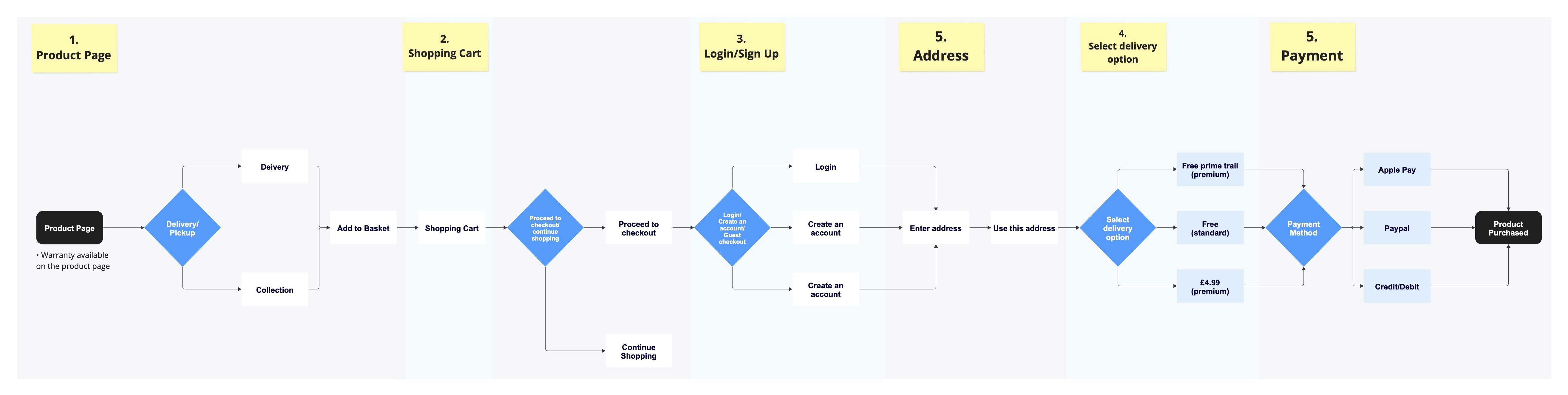
Improved
Final Resolution


Results
Usability Testing

Airbnb Sports | D&AD Brief
View the next project →
What is Framer?
Is it easy to learn?
Do I need to code?
Do I need to code?
Do I need to code?